Extreme Weather-Related Events: The Role of Payers in Preparedness, Response, and Resilience
The views expressed in this post are those of the author and not necessarily of CACHE leadership and its members.
Extreme weather-related events are becoming more common and intense. The reasons are multifactorial, and the solutions are multi-pronged. The health impacts of extreme weather events and climate change are often far reaching and devastating. Those most vulnerable to the health impacts of climate change and extreme weather events are so due to health, social, and economic factors. These populations include socially vulnerable people, indigenous populations, children, older adults, people with behavioral health and chronic medical conditions, people with disabilities, and pregnant, breastfeeding, and postpartum women.
Extreme weather events can cause disruption in routine care, especially when patients lose access to services, medications, medical supplies, or safe transportation. As a result, there is often compromised patient safety, lower quality of care, exacerbation of chronic illnesses, and higher healthcare costs. Extreme weather can quickly turn chronic condition management into an urgent care issue. In regions with persistently high environmental risk, providers could potentially relocate permanently, resulting in workforce shortages and decreased access to care.
In addition to impacts on health, climate change and extreme weather events have a negative impact on various sectors, including healthcare payers such as private health insurance and government sponsored health insurance (i.e. Medicare and Medicaid). Many sectors are taking action to implement mitigation, response, and recovery efforts. Payers are well positioned to implement strategies that support an environmentally sustainable and resilient system of health care delivery.
Why This Matters
Public payers, such as Medicaid and Medicare, provide health insurance benefits to the lowest-income and most vulnerable Americans. More than 70 million people in the U.S. get their health coverage from Medicare. Over 73 million people are enrolled in Medicaid and the Children’s Health Insurance Program (CHIP). As such, public payers are uniquely positioned to play a critical role in implementing mitigation, recovery, and resilience strategies to address the health impacts of climate change and extreme weather events on those most susceptible to harm. In North Carolina, this was especially relevant during Hurricane Helene, the deadliest hurricane to strike the U.S. mainland since Katrina. An estimated 4.6 million people (more than 40% of North Carolina’s population) lived in the impacted counties located in the western part of the state in areas with a high social vulnerability index, older populations, higher rates of disability, and limited resources to recover from extreme weather-related events. Additionally, according to the NC Office of State Budget and Management's Hurricane Helene Recovery Report, the estimated fiscal impact of Hurricane Helene on the Medicaid program was $88 million.
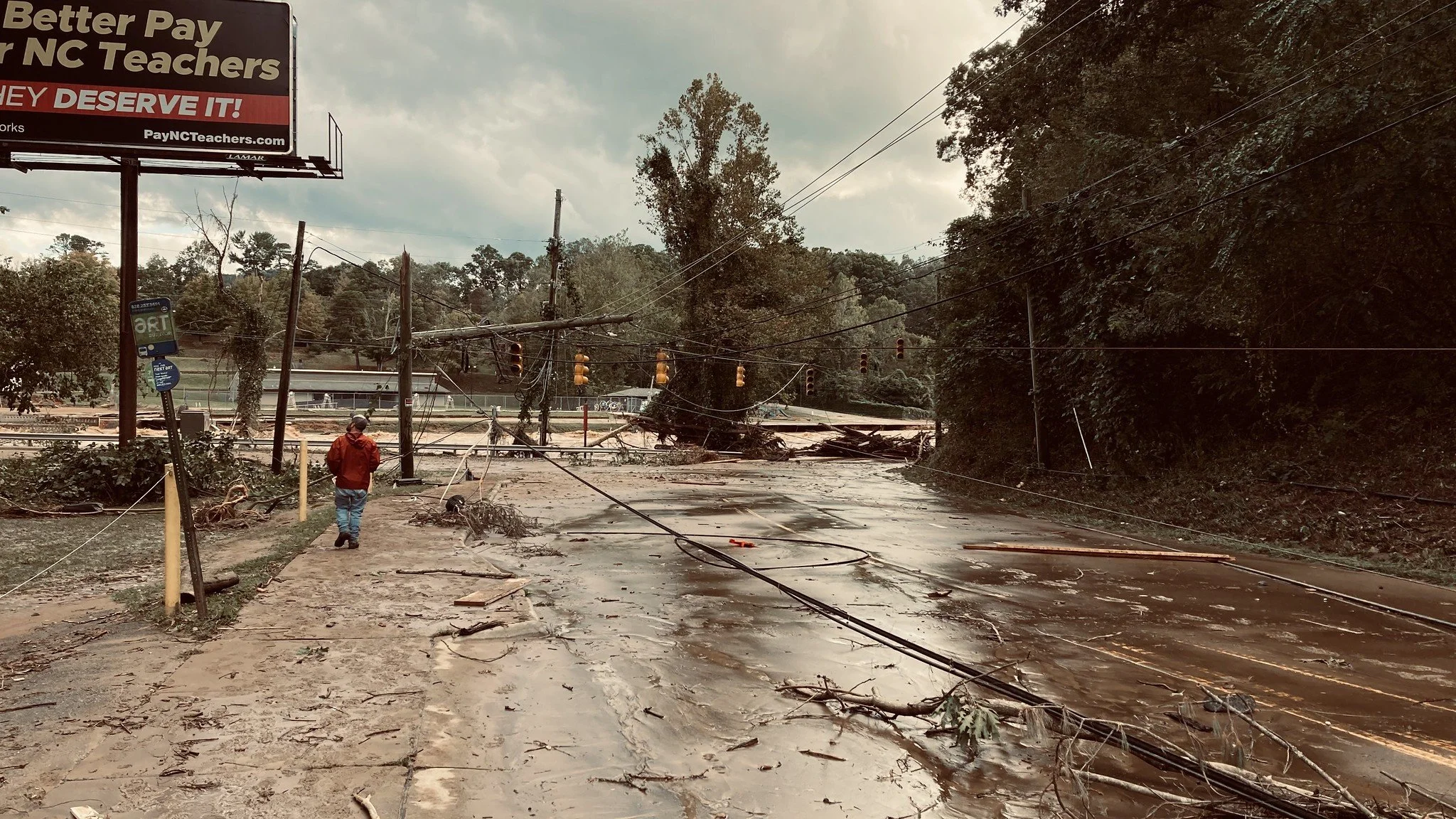
Hurricane Helene’s devastation in Asheville, North Carolina, in September 2024.
Photo by Bill McMannis on Flickr
What We Know
Following extreme weather events, such as hurricanes, exacerbation of chronic disease such as respiratory conditions, injuries, infectious disease outbreaks, disruption of routine care, and several other factors lead to increased emergency department utilization and mortality. A system that prioritizes preparedness and resilience can be the difference between a crisis that is manageable and one that becomes catastrophic.
Actions Payers Can Take to Mitigate the
Health Risks of Extreme Weather-Related Events
During emergency weather-related events, payers can temporarily implement policies and flexibilities that preserve service continuity and eliminate barriers to health care access. These flexibilities include removing prior authorizations, enabling out-of-state access to care, expediting provider enrollments, and allowing early prescription refills.
Payers can reimburse for services that address health related social needs, facilitate whole person care, and foster an ecosystem of resilience across the continuum of care. For example, North Carolina’s Healthy Opportunities Pilots (HOP) is the nation’s first comprehensive program to test and evaluate the impact of providing select evidence-based, non-medical interventions related to housing, food, transportation and interpersonal safety and toxic stress to high-needs Medicaid enrollees. Evaluation of the program showed that HOP participants had fewer emergency department visits and hospital stays.
Additionally, payers can mitigate the health impacts of extreme weather events by investing in and incentivizing climate resilience efforts that prioritize and streamline care to coordination for those at highest risk. For example, NC Medicaid has implemented annual “Supporting Medicaid Members through Extreme Weather- Related Events” webinars. The purpose of the webinars is to set the foundation for understanding the health impacts of weather-related events, identifying high-risk individuals, and implementing effective disaster preparedness and care coordination throughout extreme weather events.
With intentional action, payers can facilitate access to crucial services individuals require before, during, and in the aftermath of natural disasters, especially for those who are at highest risk. Building upon lessons learned and leveraging existing capabilities and resources, payers play a critical role in promoting and committing to support a healthcare delivery system that, in the face of an extreme weather event, maintains the capacity to deliver care and prevent further harm.