From Fellowship to the Front Lines: Building Sustainable Ambulatory Surgery Centers
The views expressed in this post are those of the author and not necessarily of CACHE leadership and its members.
As a retired gastroenterologist, I have spent much of my career inside ambulatory surgery centers (ASCs), where high-quality procedural care is delivered efficiently, safely, and close to home. What I did not fully appreciate early in my career was how resource-intensive these settings can be. Every procedure requires energy, water, supplies, medications, sterilization, packaging, waste disposal, and often anesthesia support. Multiply that by millions of cases each year, and ambulatory procedural care becomes an important but underrecognized part of health care’s environmental footprint.
Climate Health Organizing around Sustainable ASCs
My work through the Climate Health Organizing Fellowship, affiliated with Harvard Medical School and Cambridge Health Alliance, has helped me translate that concern into action. The fellowship brings clinicians together around a central idea: climate change is a health issue, and health care must be part of the solution. For me, that meant asking a practical question: how can ambulatory surgery centers reduce waste, emissions, and unnecessary resource use in a way that also makes operational and financial sense?
That question led to the development of the GreenCare ASC Sustainability Certification, an ASC-specific framework designed to help surgery centers identify measurable sustainability opportunities. The goal is not to create another unfunded mandate or abstract environmental checklist. It is to provide a practical, accreditation-aligned pathway that helps ASCs lower costs, reduce waste, improve efficiency, and demonstrate leadership.
The certification focuses on areas familiar to every ASC administrator: energy use, water use, regulated medical waste, supply purchasing, anesthesia practices, pharmaceutical stewardship, and quality improvement. It is built around the reality that most ASCs do not have full-time sustainability staff. Any useful framework must be clear, measurable, affordable, and aligned with operational priorities.
Piloting Sustainable ASCs in New Jersey and Oregon
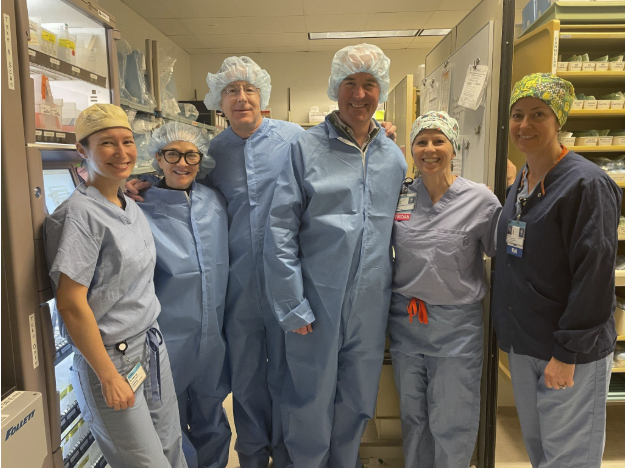
Figure 1. GreenCare ASC pilot site visit with clinical and operational team members at OHSU, highlighting the collaborative, frontline nature of sustainability work in ambulatory procedural care.
That collaborative spirit has been central to the pilot projects at Bergen-Passaic Eye Center in New Jersey and at Oregon Health & Science University (OHSU). The photo captures an important part of this work: sustainability does not happen in isolation. It happens in operating rooms, sterile processing areas, supply rooms, medication workflows, and staff conversations.
Bergen-Passaic Eye Center is an independent, high-volume ophthalmology ASC. It represents exactly the kind of center where sustainability must be practical. Independent ASCs are often nimble and able to implement change quickly, but they also face tight margins and limited administrative bandwidth. The Bergen-Passaic pilot has focused on energy efficiency, waste reduction, supply optimization, and other operational improvements that can reduce environmental impact and overhead expense.
The OHSU pilots provide a complementary perspective. At OHSU’s Center for Health & Healing and Casey Eye Institute, we have evaluated sustainability opportunities in a multi-specialty setting and a high-volume ophthalmology center. These projects have examined energy management, regulated medical waste reduction, reusable systems, blue wrap reduction, medication stewardship, and ways to reduce unnecessary supply waste.
Lessons Learned
One important lesson from these pilots is that sustainability does not have to compete with financial stewardship. In many cases, the environmental intervention is also the financially responsible intervention. Reducing regulated medical waste lowers disposal costs. Optimizing custom surgical packs avoids purchasing items that are opened but never used. Energy efficiency reduces utility expenses. Reusable or reprocessed devices can decrease purchasing costs. Better data tracking helps administrators see where money and materials are being wasted.
Another lesson is that culture matters. ASC sustainability cannot be imposed from the outside. It requires engagement from surgeons, nurses, anesthesia teams, sterile processing staff, administrators, materials managers, and infection prevention leaders. Successful projects respect patient safety and clinical judgment. They begin with measurement, identify low-risk opportunities, and build momentum through visible wins.
The Climate Health Organizing Fellowship has helped me see this work not simply as a technical project, but as organizing. It requires listening, coalition-building, and translating climate concerns into language that resonates with the people doing the work every day. In ASCs, that language is often quality, safety, efficiency, cost control, and local leadership.
Why This Matters Beyond Academic Centers
For organizations like Carolina Advocates for Climate, Health and Equity, this work illustrates an important principle: climate solutions in health care must reach beyond well-resourced academic centers. The communities most burdened by climate change — and by pollution from health care itself — are often served by independent, community-based facilities with no sustainability staff and no margin for expensive consulting. An open-access framework designed for exactly these settings extends climate action to a large and growing sector that sustainability planning has largely overlooked.
The fellowship has given me a platform to connect my clinical background with my commitment to climate and health. The pilot projects at Bergen-Passaic and OHSU are early steps, but they show that meaningful change is possible. Health care sustainability is not only about large hospitals or academic medical centers. It can begin in the procedure room, the supply closet, the sterilization area, and the waste stream of everyday outpatient care.
If you are interested in learning more about the initiative, please feel free to reach out via email at hmaunus@gmail.com.